
Lake Erie Seawalls: What Lakefront Homeowners and Buyers Must Know
Quick Answer: Do I Need to Worry About the Seawall When Buying a Lake Erie Home?
Yes, treat the seawall as a top-of-list due diligence item on any lakefront Lake Erie home. It is typically the most expensive single structure to maintain on the property, and many walls in Lake County were built during the last high-water era decades ago and are now near the end of their useful life. The good news is that a seawall issue is almost never a reason to walk away: it is a condition to price in, and knowing what you are looking at before you make an offer puts you in a strong negotiating position.
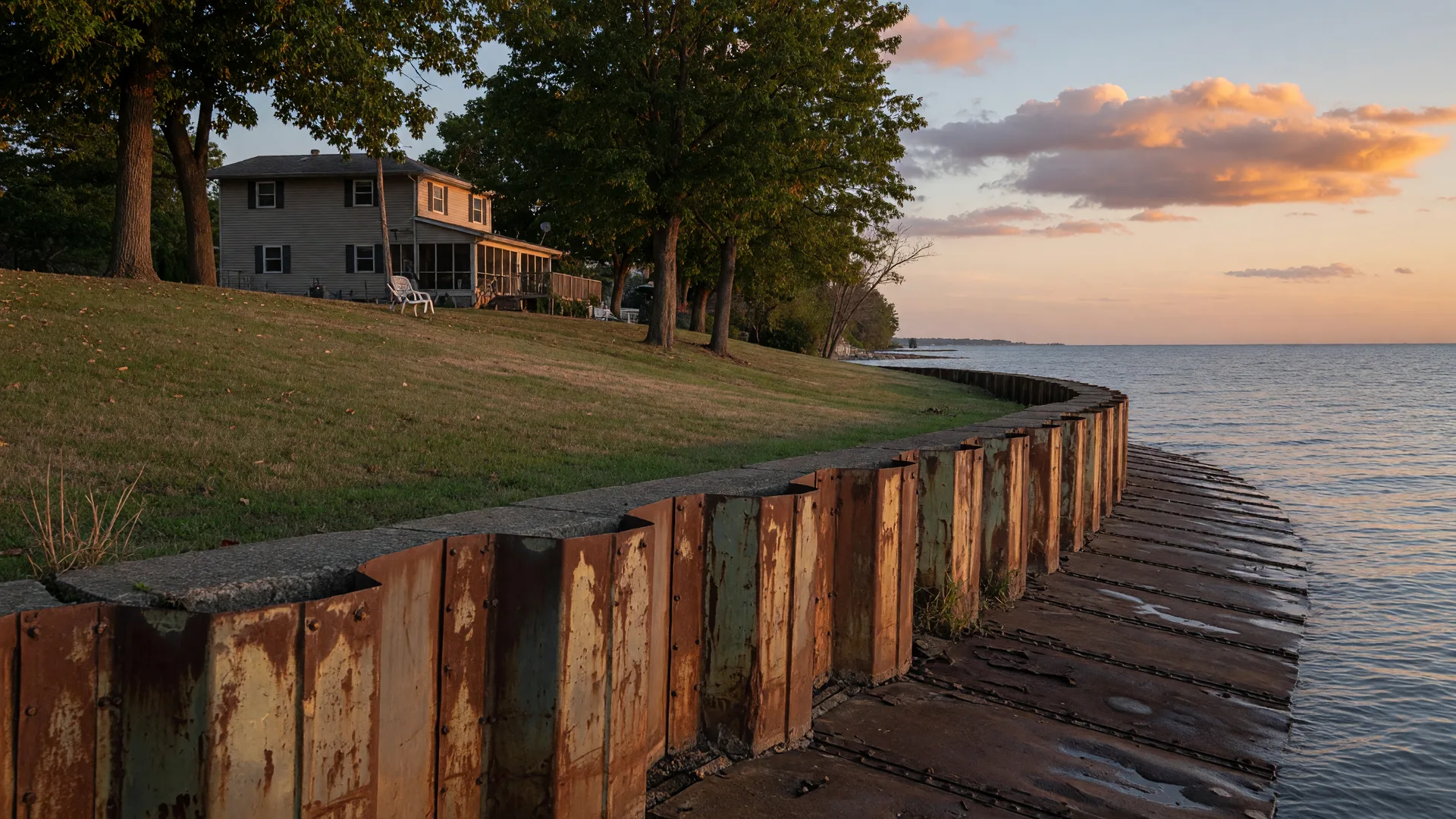
Every lakefront home in Lake County sits on a shoreline that is actively working. Waves, ice, and fluctuating lake levels are always pulling at the edge of the property, and the seawall is the structure standing between the yard and all of it. Understand how it holds up, and you understand the single biggest maintenance question on a waterfront property.
I have spent more than 30 years selling and evaluating waterfront homes along the Lake Erie shore, from Mentor Headlands to Fairport Harbor. This guide walks through the types of seawalls you will see in Lake County, how each ages, the warning signs you can spot on a walkthrough, who carries the repair obligation, the permitting side, and how a seawall should shape your decision and your offer.
Two companion guides are worth keeping on hand as you read: my full overview of Lake Erie waterfront living in Lake County, and the complete Lake County homes guide covering communities, schools, and market context.
What Types of Seawalls Are on Lake Erie, and How Do They Age?
The technical term for what most people call a seawall is a shore structure, and ODNR's Ohio Coastal Management Program regulates them all as such. On Lake Erie you will most often see one of four materials, and each one ages differently:
- Steel sheet pile. This is the workhorse on the Lake Erie shore and what many contractors recommend for open-lake exposure, because it stands up to wind-driven waves and ice. A steel wall's typical life is roughly 20 to 40 years, and the enemy is corrosion: rust thins the panels over time, so coating condition and maintenance history matter more than age alone. Ice movement and wave attack can finish off a corroded wall quickly.
- Concrete. Poured or precast concrete walls commonly last 30 to 50 years or longer with proper care. Concrete does not rust, but it does crack and spall over time, and winter ice can chip and damage the face. Drainage behind the wall and the condition of the concrete cap usually tell you how well it was maintained.
- Vinyl sheet pile. PVC walls resist rot, rust, corrosion, UV, and marine borers, so the material itself ages well, often 30 to 50 years or more. The failure point is usually not the material: it is the anchoring and the soil behind it. Waves and ice can shift or dislodge a poorly anchored vinyl wall even when the panels look fine.
- Timber. You will see older timber bulkheads on some cottages and sheltered shoreline. Timber has the shortest life of the common materials, roughly 15 to 25 years in freshwater, and it is vulnerable to rot, marine borers, and constant wave and sand action. A timber wall on open Lake Erie exposure is usually at or past the end of its service life.
A few waterfront lots have no vertical wall at all. Some rely on a natural bluff, and others use a sloping stone revetment, commonly called riprap, to absorb wave energy. Those are different structures with their own erosion dynamics and rules, so ask what protects the property and treat it accordingly.
How Do You Assess a Seawall When Viewing a Lakefront Home?
On a walkthrough, you can learn a lot from a careful look at the wall from both the lawn side and the water side when it is safe to do so. Here are the signs I look for, and the ones I ask a professional to verify:
- Cracks. Deep horizontal cracks often signal pressure building behind the wall, sometimes from water or saturated soil. Vertical cracks often point to settlement or movement in the underlying material. Hairline cracks on an otherwise stable wall can be cosmetic; wide or growing cracks are a real concern.
- Bulges. A section of wall pushing outward toward the water usually means the anchoring system is failing or soil pressure is winning. Bulging is one of the most serious warning signs because it can progress to collapse.
- Rust. On steel walls, look for rust stains and corroded, paper-thin panels, especially around the waterline and near the top of the wall. On concrete, brown staining dripping below the cap often means the reinforcing steel or tie rods inside are corroding.
- Leaning. A wall that has rotated or tilted toward the water is the classic signature of tie-back failure. Even a modest lean is worth a professional opinion, and severe leaning usually means replacement.
- Gaps. Widening gaps between panels, soil or water seeping through the joints, and loss of material behind the wall all point to an aging structure. On the lawn side, look for depressions, sinkholes, or areas where the soil has washed out, since a wall is only as good as the ground behind it.
- The cap. The concrete cap ties the wall together at the top. Crumbling, spalling, or missing cap sections tell you the wall has not been maintained, and staining beneath the cap can signal deeper corrosion.
Here is my honest advice: a standard home inspection is not enough on a lakefront property. Hire a licensed marine contractor or a seawall specialist to inspect the wall, review the anchoring, and give you a written opinion on its remaining life. That inspection is one of the best dollars of due diligence you will spend on a Lake Erie home, because it turns guesswork into numbers you can negotiate with.
Who Is Responsible for Seawall Maintenance and Replacement?
On Lake Erie, the upland property owner is responsible for the seawall that protects their land. Seawalls are privately built and maintained improvements, and when a wall fails, the repair bill belongs to the owner, not the state or the community. That rule matters to buyers because it means the wall you are inheriting comes with a maintenance obligation, and often a large one.
There is also a legal backdrop worth understanding. The State of Ohio owns the lakebed from the natural shoreline outward, and private structures that encroach beyond it sit on state-regulated territory. That arrangement is exactly why shoreline work carries its own permitting system, which we will get to in a moment, and why walls are built to a line rather than simply wherever the owner wants them.
Shared walls between neighboring properties follow common boundary-wall rules. If a wall sits entirely on one owner's land, that owner maintains it. If the wall straddles the boundary, responsibility is typically shared, and repair costs are split, unless one owner caused the damage or the neighbors have a written agreement that says otherwise. On any lakefront purchase, ask directly who maintains the wall that touches your lot, whether any shared-wall understanding exists, and get whatever arrangement is promised in writing. In some marina and lagoon communities, shoreline structures are managed by an association, so confirm where the individual lot line ends and the association's responsibility begins.
What Permits Do Seawall Repairs and Replacements Need?
Seawall work along the Ohio shore of Lake Erie is not a simple DIY or county-permit project. Because the lakebed is public trust land and Lake Erie is a navigable water of the United States, repair and replacement typically requires coordination across three levels:
- ODNR. The Ohio Department of Natural Resources requires a permit to construct a seawall or other shore structure on state waters, administered through its coastal management program. If the property sits in a designated Coastal Erosion Area, additional permitting rules for permanent structures apply, and work that extends onto state-owned submerged land can require a submerged lands lease.
- Ohio EPA. Because the work touches Lake Erie waters, a Section 401 water quality certification from Ohio EPA is typically part of the package, confirming the project will not violate state water quality standards.
- U.S. Army Corps of Engineers. The Buffalo District regulates Ohio's Lake Erie shoreline. A Section 10 permit covers structures in navigable waters, and discharges of dredged or fill material fall under Section 404. Much residential repair and replacement of an existing, serviceable wall is handled through nationwide permits, usually with a pre-construction notification to the Corps.
The practical takeaway is simple: use a contractor who has built seawalls on Lake Erie before and knows the permit path. Permit requirements influence both the timeline and the final cost of the project, and they are a big reason why a careful owner should not kick a failing wall down the road. When you are buying, ask whether the wall was permitted, whether any permits exist on file, and whether any shoreline work is currently in process. An unpermitted or disputed wall is a headache you want to discover before closing, not after.
One more thing worth knowing: during high-water emergencies, ODNR has issued temporary shore-structure permits to let owners act quickly, and those temporary authorizations typically last about two years. They are a reminder that regulation follows the lake's cycles, and an experienced local contractor will know the current path.
What Does Seawall Repair or Replacement Involve?
A seawall is a structural anchor system, not just a wall of panels, and that is the first thing most buyers do not realize. Behind the visible face sits a network of tie-back rods connected to buried anchors, often deadmen or helical anchors set well back from the water. The concrete cap ties the top together, and the toe of the wall has to be embedded deep enough that waves cannot undermine it.
So a repair can mean any combination of: excavating a trench behind the wall to relieve soil pressure, replacing corroded tie-back rods, adding supplemental anchors, repairing or replacing the cap, adding stone or concrete protection at the toe to stop scour, and replacing damaged panels. A full replacement means removing the old structure, driving new sheet piling, rebuilding the cap, installing new tie-backs, and restoring the lawn behind it.
Here is why the price varies so much from property to property:
- Length and height. Seawall work is quoted per linear foot of wall, so a short lakefront lot and a long estate shoreline are entirely different projects.
- Access. This is usually the biggest variable. A wall with street or yard access for an excavator is far cheaper to work on than one that can only be reached by barge or where equipment has to thread between the house and the water.
- Exposure. An open-lake wall takes harder wave and ice punishment than a wall in a sheltered marina, cove, or lagoon, which affects both the materials used and the working window.
- Soil and condition. Sandy shorelines hold anchors differently than clay, and the remaining condition of the existing wall decides whether targeted repairs are even possible or a full replacement is required.
- Permitting. A project that qualifies for a nationwide permit moves differently than one that needs an individual review, and the difference shows up in timeline and cost.
In general terms, a targeted repair such as new tie-backs, a cap replacement, or toe protection is a fraction of the cost of a full replacement, and it can add meaningful years to a wall. A full replacement for a typical 50-foot lakefront lot is a major project, measured in the tens of thousands of dollars and up depending on access and exposure, and it can stretch well beyond that for longer or harder-to-reach walls. That is why the contractor's estimate, not a ballpark guess, belongs in every waterfront offer conversation.
How Should the Seawall Factor Into Your Decision and Offer?
Think of the seawall as a capital asset with a lifespan, like a roof, only bigger. Nobody walks away from a house because the roof is 30 years old; they price the replacement into the offer, or they ask for a repair credit. A seawall deserves the same logic, and the same professional due diligence.
Before you write an offer on a lakefront Lake Erie home, do these four things: get a marine contractor's inspection with a written opinion on the wall's remaining life, ask the seller for the wall's age and any repair or permit history, confirm the permitted status of the existing structure, and get a repair or replacement estimate in hand. If the wall shows significant wear, negotiate a credit or price adjustment against that estimate, or structure the offer with a seawall contingency tied to the inspection results.
For sellers reading this, a wall in sound condition is a genuine selling point on the lake market, and a recent contractor's report can be a powerful part of your disclosure package. A well-documented wall tells buyers they are buying a protected, cared-for property, and it removes the exact fear this guide addresses.
At the end of the day, a seawall is a cost of owning the best backyard in Ohio. The views, the beach access, and the lake lifestyle are worth planning for, and a clear-eyed buyer who prices the wall correctly gets all of the upside without the unpleasant surprise. If you are weighing a lakefront purchase, my waterfront living guide covers the communities and the market, and the Lake County overview helps you compare them. Then call me, and we will build a plan that includes the wall in every number.
FAQ: Lake Erie Seawall Questions Buyers Ask
Do I need a separate seawall inspection before I buy a Lake Erie home?
Yes, absolutely. A standard home inspection does not cover the structural condition of a shoreline wall. Hire a licensed marine contractor or seawall specialist to evaluate the panels, the tie-back anchors, the cap, and the toe, and to give you a written opinion on remaining life. It is a modest fee compared with the cost of replacing a wall you did not know was failing.
How long does a Lake Erie seawall last?
It depends on the material and the maintenance. Steel sheet pile commonly lasts roughly 20 to 40 years and is driven by corrosion, concrete walls commonly last 30 to 50 years or more with proper care, and vinyl resists corrosion itself but depends on solid anchoring. Many walls along the lake were built during the last high-water era and are now at or near the end of their useful life, so age alone is worth asking about on every property.
Do I need a permit to repair or replace my seawall?
In most cases, yes. Seawall work along Ohio's Lake Erie shore typically requires an ODNR shore structure permit, an Ohio EPA Section 401 water quality certification, and coordination with the U.S. Army Corps of Engineers' Buffalo District, often under nationwide permits with a pre-construction notification. An experienced Lake Erie contractor will handle the permit path, which is one more reason to hire local.
Does a seawall add value to a lakefront home?
A well-maintained seawall protects the one thing that makes the property valuable: the usable, stable yard between the house and the lake. A failing wall, by contrast, is a liability that should reduce the price by the realistic cost of repair or replacement. Value comes from the wall doing its job quietly, and from the buyer knowing it was done right.
What if the property has no seawall?
Some Lake County properties are protected by a natural bluff or a sloping stone revetment rather than a vertical wall. Those have their own erosion dynamics and their own rulebook, so ask about erosion history, any coastal erosion area designation, and what the owner does to manage the shoreline. No wall at all simply means the shore is doing the work, and you need to understand how it behaves before you buy.
Related Resources

Sean Stewart
Stewart Team Homes · Keller Williams Greater Cleveland Northeast · License #0000404961