
Quick Answer
Is moving from California to Lake County, Ohio a good idea?
For most California families, yes. Lake County home prices run at a fraction of coastal California levels, Ohio's state income tax tops out just above 3% and drops to a flat 2.75% in 2026, versus California's 1% to 13.3% brackets, and districts like Kirtland and Mentor hold their own academically. The honest trade-offs are the winter, which is a genuine lake-effect experience, and a housing stock you will have to relearn: attached garages, basements, and real yards instead of carports and tract patios.

Written by Sean Stewart, REALTOR® · Keller Williams Greater Cleveland Northeast · 30+ Years in Lake County Real Estate
I get more questions from California than from anywhere else, and the first thing I tell every caller is to separate the fantasy from the math. This playbook lays out the concrete differences that actually matter to a family packing up a California life and pointing the moving truck east: what the money does, what the winter does, what the schools do, and what you should expect to find when you walk your first Ohio basement.
Why California Families Are Making This Move
The economics are simple and they are real. Lake County's cost of living is roughly 10% to 16% below the national average, and housing is where that gap lands. Median home values in the county's family communities sit in the low-to-mid $200,000s, against Ohio's statewide median of roughly $210,000 to $250,000 depending on the source. In most parts of California, that same figure is several multiples higher. Equity that buys a starter condo in the Bay Area or Orange County frequently buys a four-bedroom colonial with a yard, a garage, and a good school address in Mentor or Concord.
I will also be straight with you: California is not the most common origin state in the census data for Ohio. Florida and Michigan send more people here by raw count. But California is the move that gets researched the hardest, and the families who make it tend to be the most deliberate about it, because the distance forces you to plan.
The Money Comparison: Taxes and Housing
California's state income tax runs from 1% up to a 13.3% top bracket, and it taxes pensions, IRAs, and 401(k) withdrawals as ordinary income. Ohio's state income tax is a different species: the top bracket was about 3.1% in 2025, it drops to a flat 2.75% in 2026, the first $26,050 of income is untaxed, and Social Security is fully exempt at any income level. For a working family, the state income tax difference alone is often worth thousands of dollars a year.
Property tax is where the two states trade places. California's Proposition 13 caps the base rate near 1% of assessed value, while Lake County's effective rates typically run about 1.7% to 1.8% of market value, above the national median. That sounds like a warning until you do the multiplication: the rate applies to a home priced at a fraction of the California one. The result is that your annual property tax bill on a Lake County home is usually well below what you were paying on a California house. Budget for the rate, but expect the dollar amount to surprise you pleasantly.
The Winter Reality
This is the one that makes Californians go quiet on the phone, so here is the honest version. Lake County sits in the Great Lakes snowbelt and averages around 70 inches of snow a winter, about two and a half times the national average. Cleveland proper averages closer to 60. The snow comes down in narrow lake-effect bands, which means one neighborhood can get a foot while the next township over gets flurries, and the season runs from roughly November through April, with the heaviest snow in December and January.
What does that mean for daily life? Roads are plowed aggressively and life does not stop. Kids still go to school, offices still open, and lake-effect events are forecast days in advance. What changes is your gear and your calendar: winter tires or good all-weather tires, real coats and boots, a shovel strategy, and a little more respect for a January forecast. Spring, summer, and fall are a genuine reward, with warm lake summers and the best autumn color in the country, but if you have never driven in snow, take the first winter slowly.
Schools and Neighborhoods
The district conversation behaves differently here than in California, because in Lake County the school district is set by the street you buy on, not by a citywide lottery or a magnet system. Kirtland Local Schools is the county's academic standout: top 10% of Ohio districts by most ratings, top 5% in math, and perfect scores on Ohio's report card. Mentor Exempted Village Schools is the big, well-rounded choice: the county's largest district, a B+ rating on Niche, and a high school with strong AP offerings and a deep extracurricular bench.
For families coming from California's high-pressure school markets, our public schools feel different in a good way: neighborhood schools, bus routes, Friday night football, and a community that shows up. The full comparison of all six districts is in the school districts guide, and the best family communities section of the hub matches districts to the streets that feed them.
Home Styles: What You Will Find in Ohio
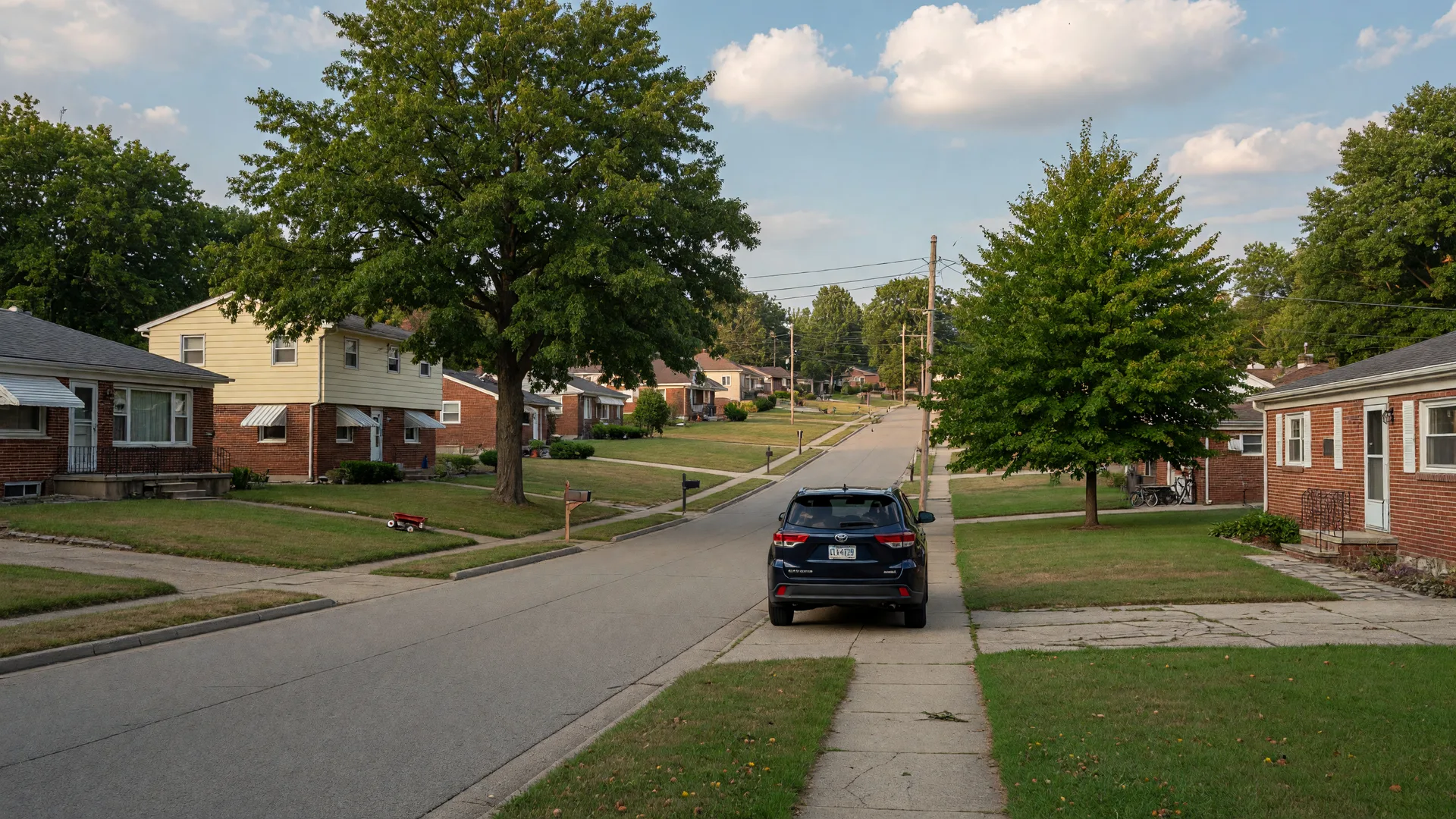
The houses themselves are a culture shock in miniature. Most Lake County homes are wood-frame construction with a full basement, an attached garage, and a furnace you will actually run. California transplants tell me three things surprise them most: basements, which nearly every Ohio home has and Californians only know from movies; attached garages, which most older California homes never got; and the sheer size of yards. You will also learn words like sump pump and radon mitigation, and if you buy in a township outside city limits, you may be on a private well and septic system, which are entirely routine here and thoroughly inspectable before closing.
Air conditioning is standard, inflation of that word aside: Ohio summers are warm and humid, with July highs in the low 80s, and a home without AC is a rarity rather than a California-style upgrade.
Buying From a Distance
Every part of this process can run from California. My relocation process starts with a call, then virtual tours and video walkthroughs of homes and neighborhoods, and most of my out-of-state buyers make one trip to Ohio or even close without visiting. A typical financed purchase closes in 30 to 45 days, Ohio has allowed remote online notarization since 2019, and the title company handles the remote closing. One 2024 change to know about: Ohio now requires a written buyer agency agreement before an agent shows you homes or writes an offer. It protects you as much as your agent, and signing it at the first showing is normal, not a red flag.
My Bottom Line
California to Lake County works when a family comes in with clear eyes: the money is dramatically better, the schools are strong in the right districts, and the winter is a real thing you will learn to manage. I have walked dozens of California families through exactly this spreadsheet, from the 13.3% bracket to the first lake-effect advisory. Reach out when you are ready to run the numbers for your family.
Frequently Asked Questions
Yes, materially further. Lake County’s overall cost of living runs roughly 10% to 16% below the national average, and housing is the biggest driver: median home values here land in the low-to-mid $200,000s in most communities, against an Ohio statewide median around $210,000 to $250,000 depending on the source. The same budget that buys a smaller condo in coastal California often buys a full house with a yard here. The offsets to budget for are property taxes, which run above the national median, and winter utility and maintenance costs.
California’s state income tax runs from 1% up to a 13.3% top bracket, and it taxes pensions, IRAs, and 401(k) withdrawals as ordinary income. Ohio’s rate is low: the top bracket was about 3.1% in 2025 and drops to a flat 2.75% in 2026, with no tax on the first $26,050 of income and no tax on Social Security at any income level. Property tax flips the other way: California’s Proposition 13 caps the base rate near 1% of assessed value, while Lake County effective rates run about 1.7% to 1.8% of market value. The rate is higher here, but it applies to a far lower home price, so the annual bill is usually a fraction of the California property you would be leaving.
Honestly, it is the biggest adjustment. Lake County sits in the Great Lakes snowbelt and averages around 70 inches of snow a winter, versus about 60 in Cleveland proper and 28 nationally. The snow arrives in narrow lake-effect bands, so totals vary block to block, and the season runs from roughly November into April. January days top out in the mid-30s. Roads are well plowed, life keeps running, and decent winter tires matter more than a big truck, but if you have never driven snow, plan to learn slowly and buy gear before you land.
In the right district, yes. Kirtland Local Schools is among the top 10% of Ohio districts by most ratings with perfect Ohio report card scores, and Mentor Exempted Village Schools is the county’s largest and best-rounded district with a strong high school and deep extracurriculars. The honest caveat is that school quality in Lake County varies by district, so the street you buy on matters. The county school district guide walks through all six districts with their actual profiles.
Yes. My relocation process is built around virtual tours, video walkthroughs, and neighborhood matching done over calls, and most of my out-of-state buyers make one trip or even close without visiting in person. A typical financed purchase closes in 30 to 45 days, remote online notarization has been legal in Ohio since 2019, and the title company handles the remote closing paperwork. Expect to sign a written buyer agency agreement before your first showings, which is standard in Ohio since late 2024.
More state playbooks
Compare your move with the other most-common routes into Lake County.